
I’m sure you are already good at something. And even if you feel you don’t have anything good to offer to the world, think again.
That little treasure, that ability of yours, can be transformed into something profitable, like a kind of a business, but with very limited monetary investment upfront.
If you give yourself a chance (or many chances, the better!) and you decide to leverage your potential, congratulations, you are well on your path to start a side hustle!
At least, this simple yet powerful and encouraging message is what I learned reading one of the most successful books by Chris Guillebeau, a book writer, blogger, traveler, and a master in non-conventional business and self realization.
The book’s title (a NYTimes bestseller) is “The $100 Startup: Reinvent the Way You Make a Living, Do What You Love, and Create a New Future”.
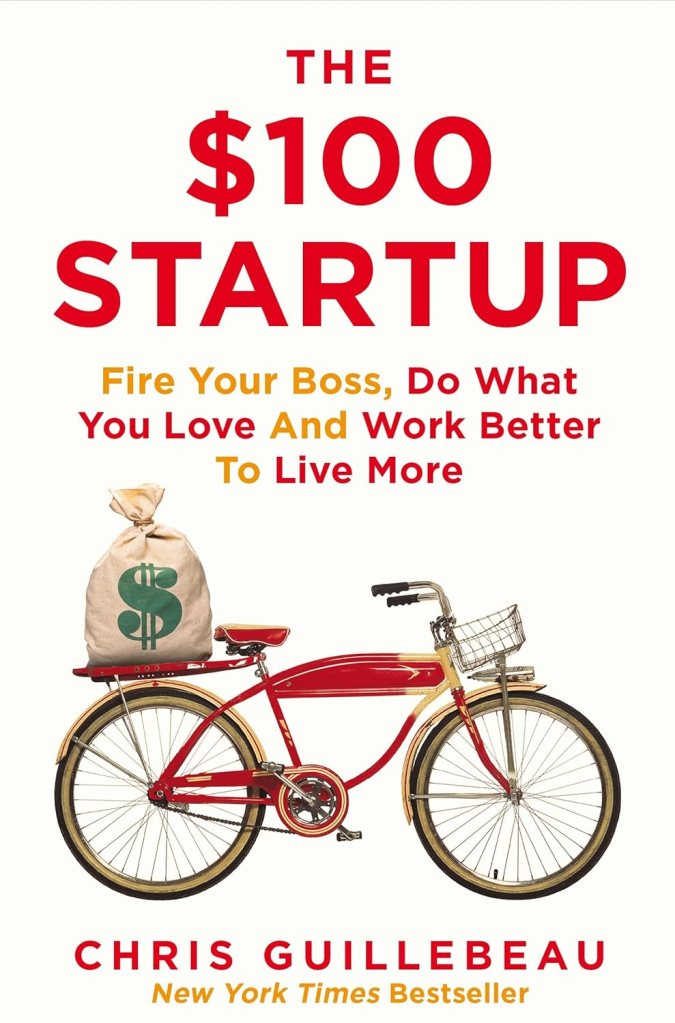
Here in this post I’d like to talk about why that book is amazing and why the idea of a “side hustle” (which only in part overlaps with the notion of side gig, or side job) is simply a great one, especially for people starting out in “business”.
Chris also wrote many other books about that topic, or about similar topics (money, self realization in today’s society, …). Also, he hosts a podcast with daily stories from people who started their adventures in business. Even the podcast is highly recommend: its name (and link) is: Side Hustle School.
About the author
Chris Guillebeau has quite a compelling personal story. He’s a traveler and visited many countries in the world (in the tens, even close to a hundred…). He also made a career around the concept of “nonconformity“: your career and job/lifestyle doesn’t necessarily have to follow the usual path or match what most people do.
On his websites (https://chrisguillebeau.com/about) you’ll find a descriptive quote that frames well his intent and his biography:
«A home for unconventional people doing remarkable things. I’m Chris Guillebeau. I write books and travel. I started this blog to chronicle my journey to every country in the world—but it’s since grown into a hub for original thinking.»
(from Chris Guilleabeau’s website)
I enjoyed so much Chris Guillebeau’s attitude towards creating a business, that I’m often finding myself giving advice to friends about side projects.
I encourage them to let their passion bloom and enjoy a more personal attitude toward economy! Of course, most of my friends give me a half smile and move on… but that should’t let you from trying the “side hustle” thing!
What is a side hustle, exactly?
Chris Guillebeau has told us what a side hustle should be: something you are not only passionate about, but most importantly: you are good at!
People should pay you for what you do, sell or offer to them. Your “side hustle” should be ultimately something useful to the world, or at least to some niche of clients.
The core message here is that a side hustle is not a hobby: it must be an income-generating project. So a simple hobby is not a proper side hustle.
You need to inject in it the willingness, pace and systematic effort to obtain a return.
And that’s a core point here, something that is often underrated:even if starting a side hustle should take a small amount of money, it does demand significant effort in terms of commitment and consistency.
Don’t forget also that you’ll face new hurdles and thing you totally wouldn’t expect. You are going to start a small business, more or less, so be packed with a lot of resilience and willingness to learn new things.
Some of the stories in the book
Chris identified 1,500 people who started businesses generating $50,000 or more, often from a small investment (sometimes as little as $100, as the title claims).
He only concentrated on “micro entrepreneurship” and “microbusinesses”, which are «businesses run by only one person», writes Chris. The stories he collected in fact are about start ups with fewer than five employees.
He then focused on the 50 most interesting examples, and put them in the book.
Many of those individuals didn’t have specialized skills, but they found ways to turn their personal passions into profitable ventures, allowing them to reshape their lives for greater freedom and satisfaction.
Some side jobs are born out of necessity. First, we learn about Michael, an experienced sales expert who lost his job during the economic crisis of 2009. After a moment of despair, a friend contacted him because they had a truckload of furniture, specifically mattresses, and thought Michael might be able to sell them.
Michael did great, and that experience inspired him to learn more about mattresses and their business potential. His wife built a website while Michael delivered mattresses by any means necessary—even with a modified bicycle!
Long story short, two years later, he is fully and happily running his mattress store business!
Some other side hustles thrive on the knowledge economy, boosted by internet obviously. So Chris collected this story about a former Indian business analyst, who started a blog, and gradually during the years made it a highly profitable business.
The kind of content he made? He developed a business in training and courses about Excel, for an international audience. Now he has and annual income of six figures, which is outstanding for the Indian average.
Many other side hustles focus on helping people with travel related issues, like discounts and fly bookings. For example, Gary, a CFO for academic institutions, is great at helping travelers (at least, specific types of travelers) making the most of their frequent flyer miles.
For a fee, he sets up the trip based on the preferences clients tell him. «This part time job», Chris writes, «brought in $75,000 last year and is on track to top six figures annually».
Other people are expert in a field and know well the pain points of their jobs and the hurdles their colleagues face. So Brandon, a music teacher living in Utah, knows that «music teachers don’t want to deal with business administration; they want to teach music».
Having to deal with administrative tasks himself, he was well versed into it. As Chris writes, Brandon didn’t want to create a business at first, he just wanted to help his colleagues solve their problems. But in the end, he created a platform online, with a subscription based fee, which makes teachers save money and time. Now he travel most of the time thanks to the profits of his “side hustle”!
I loved reading bunch of stories like that, and it is way better to read them from Chris’ books itself, which is rich in advice and guiding principles for side hustle beginners.
Don’t leave your job (for now), don’t get into debt
Let me recap some of the characteristics of a side hustle (and investments needed).As you can learn from Chris’ book, a side hustle:
- Doesn’t require you to let go of your job (if you already have one, keep it, and develop something on the side in your spare time, even if it is hard to do other things after a full day of work. Maybe later on you’ll drop the first job…).
- It leverages on your skills, attitudes and passions.
- It shouldn’t cost a whole lot (you definitely shouldn’t get into debt, any debt, to start a side hustle).
- True side hustles are not expensive to start. Keep the project under $ 1000. If you can, stick even with the book’s title: keep it about $100. In fact, most of those kind of businesses can be started with very little money effort.
- It does demands your time and effort, especially in the first months. In that phase, look for some rewards, but know that frustration will be always with you. Just don’t give up!
Other things to keep in mind if you want to start a side hustle
Ideally, a side hustle can start even by consulting. Chances are you are expert in some areas, you have some specialized or niche knowledge, and you can count on that for offering some services.
Regarding my experience with side hustling, blogging and creating online courses have become very interesting side activities for me, something I never thought I would do.
But I recognize that today maybe too much emphasis is put on the online – and “immaterial” – world (which is fine of course because most of money exchanges and selling happen online).
But I’d re-evaluate local businesses and local opportunities too. Side hustles can thrive and should indeed thrive in local economies.
There is always some needs to be covered in local communities. It be just things like: helping the elderly, inventing some smart new ways to do things or simply providing a better service.
All of this can be done with almost what you already have. And if the need correspond to your passion, you are on the good way to make a side hustle.
A side hustle demands you to be creative, inventing new solutions (or better and slightly different solutions), to problems of any kinds.
Also, legal aspects shouldn’t scare you. Just legal things thoroughly assessed from the beginning, and you’ll be fine. When one starts a new venture there is always uncertainty, but it is your responsibility to abide the law.
The best solution here is to contact a professional (not a “friend” or search fot an answer on Quora, or such!). If you are in doubt, pay a true professional first (a fiscal expert, and accountant, a lawyer…), and you’ll start your journey with way less headaches.
To sum up the benefits of a lightweight business
I appreciate Chris Guillebeau’s efforts in sharing his kind of vision of business, not only because he’s a very good writer, but also because he showed how life-changing it is to create something out of your passions. It’s by no means easy or simple in terms of effort and time, but well worth it.
There are examples of sides hustles everywhere. Some people managed to get them going quite well, so it is not uncommon to learn about side activities which became true profitable businesses.
For their founders, that meant a successful transition to a position that better fulfilled their personal goals.
Many other engaging stories
I think you’ll enjoy not only The $100 Startup, but also other Chris’ books. They all offer heartwarming collections of stories about people venturing into business.
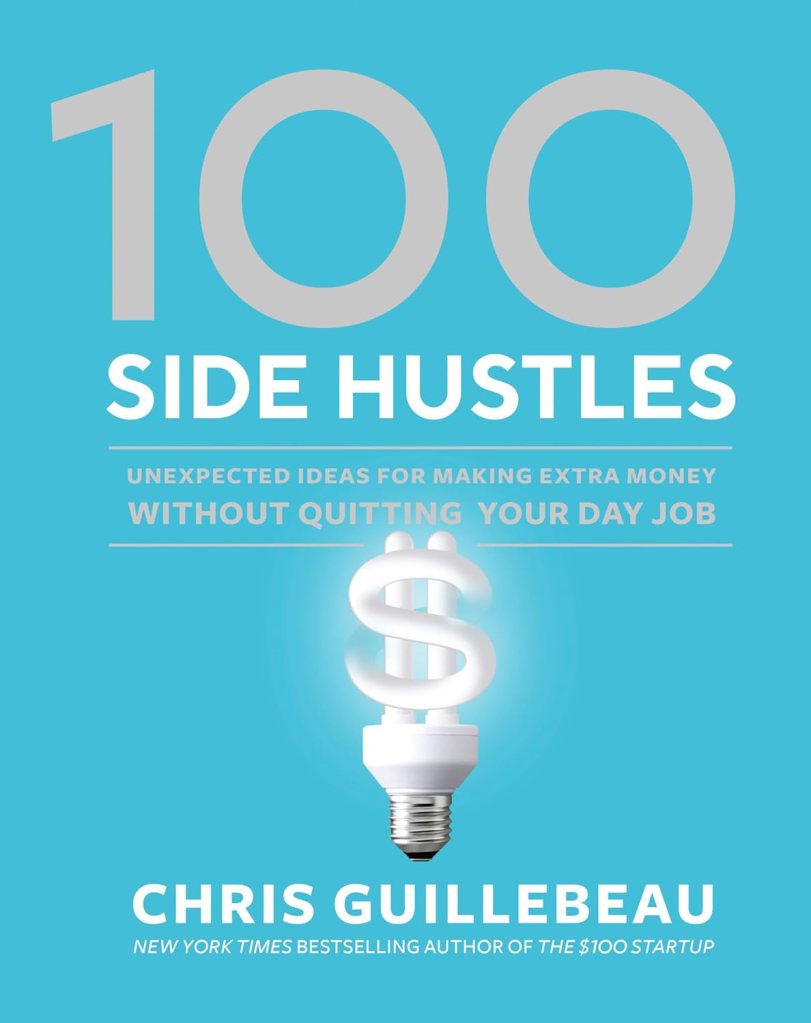
For example, the book “100 Side Hustles: Unexpected Ideas for Making Extra Money Without Quitting Your Day Job” not only covers a huge number of stories but also categorizes them and offers advice and steps for anyone who wants to try similar ideas.
Let me know in the comment which long-forgotten passion and skill of yours you wish to transform in a profitable business. Even better, let me know that you decided to start now! That’s the most important thing.
As Chris Guillebeau loves to say (I quote from memory): “Ideas are good, but ideas followed by action are better.”
Cheers.
Lorenzo






 Money Plato
Leave a comment